By Use Case

Campaign Planning and Execution

Campaign planning usually breaks because every brief starts from scratch and the logic linking audience insight to messaging, content, and measurement is not preserved. AI x GTM runs the full pipeline — from marketing plan through sales collateral — with every piece inheriting the strategic context you built at the start.

Why It Helps

You have a marketing plan in one doc, a messaging matrix in a spreadsheet, a content calendar in a project tool, and conversion content scattered across drafts. None of them reference each other. Every new campaign cycle, you rebuild the strategic logic from memory. When context is automatically connected and memories maintained, you can move faster, with greater consistency, in a way that’s easer to measure over time.

Why You'll Use It

  • Generate a marketing plan + messaging matrix from project & product analyses, then flow those into conversion plans and sequences.
  • Produce campaign assets — landing pages, emails, blog posts, ads, etc. — ranked by target audience relevance and weighted by fit.
  • Create draft budgets, Google Ads targeting data, and sales enablement collateral as natural outputs of the same planning pipeline.

The Full Pipeline, Connected.

The Planning stage produces a marketing plan, messaging matrix, optional target segment analysis, and budget draft. The Conversions stage uses those artifacts to generate content concepts for every funnel stage — awareness through retention — ranked by target audience profile relevance using the Borda scoring algorithm. The Sales Enablement stage produces supporting collateral. Every piece inherits the context established upstream.

Budgets and Ad Targeting Built Into the Workflow.

Draft budgets are generated from your marketing plan parameters. Target segment analyses produce audience profiles that double as Google Ads targeting specifications — demographics, interests, intent signals, and keyword themes. These are not separate tools; they are outputs of the planning stage that feed naturally into campaign execution.

From Strategy to Calendar to Content.

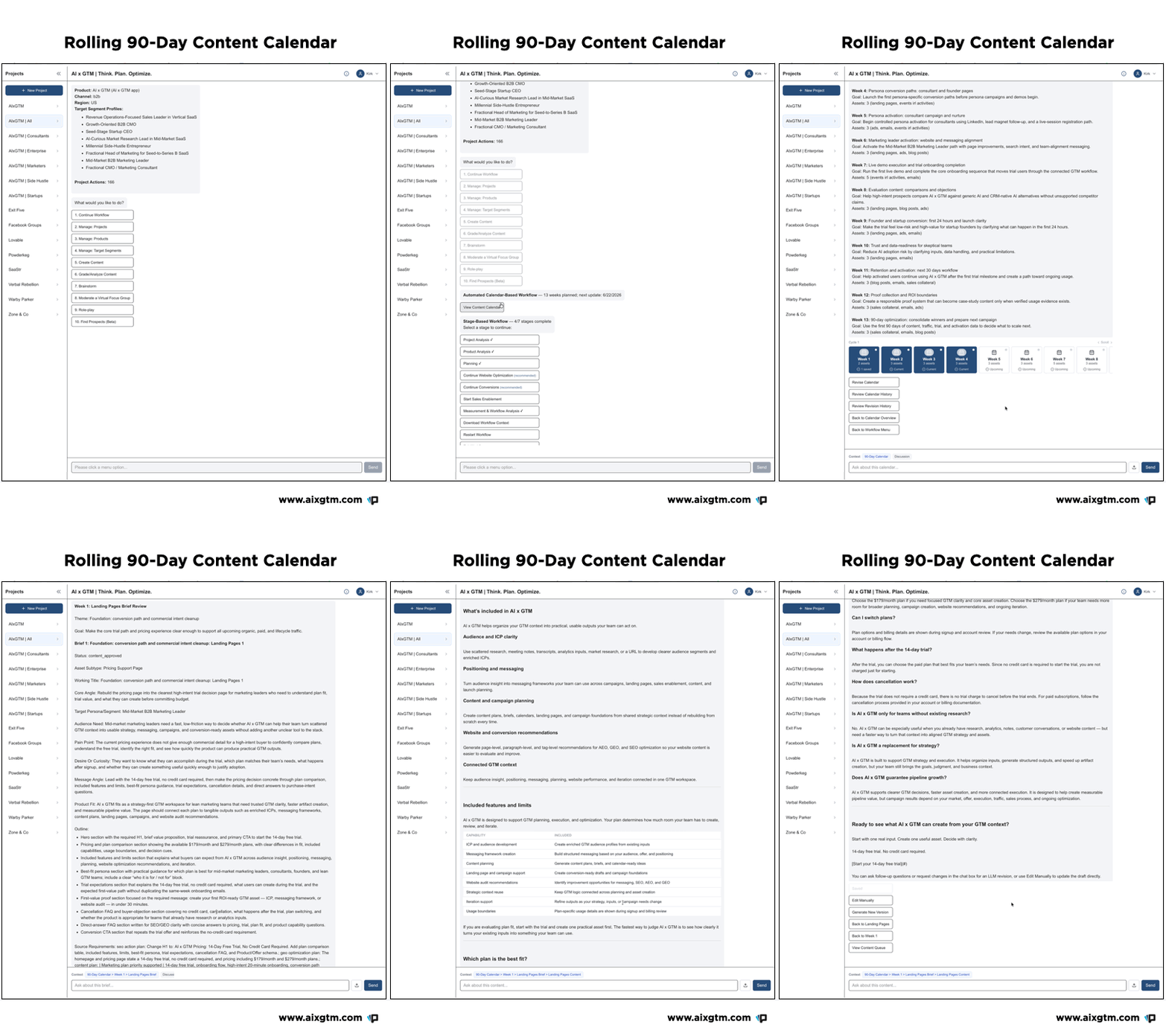
The workflow connects your marketing plan to a content calendar to actual content production. Blog posts, landing pages, email sequences, and social media assets are all generated with full awareness of your positioning, target audience profiles, and funnel stage. When you update your strategy, downstream content recommendations update with it.

GTM Planning For Everyone

Why Not Just Take AI x GTM For A Test Drive?

As long as you have a url, an open mind, and a few minutes to spare, you can see for yourself if it's right for you — not because speed matters, but because demonstrating time-to-value does.

FAQ

How Does Campaign Planning Work Inside the Workflow?

The Planning stage generates a marketing plan and messaging matrix from your project and product analyses. From there, the Conversions stage walks you through each funnel stage with content concepts ranked by target audience profile relevance, and the Sales Enablement stage produces supporting collateral. Every piece inherits the strategic context established earlier.

Can I Generate a Content Calendar from the Marketing Plan?

Yes. The content calendar is built from your marketing plan and messaging matrix. It organizes content concepts by funnel stage, target audience profile priority, and timing, giving you a production schedule that stays connected to strategic intent rather than being an arbitrary list of topics.

Related pages