Resources

How to Create Ideal Customer Profiles

Ideal Customer Profiles help teams decide who to target, how to speak to them, and which opportunities deserve the most attention. This updated guide turns the strongest material from the original CMO Copilot ICP page into a cleaner resource for AI x GTM users, consultants, and startup teams.

Fast GTM Output

Five GTM Deliverables You Can Create Right Away

Turn the inputs you already have into practical GTM work your team can review, refine, and use.

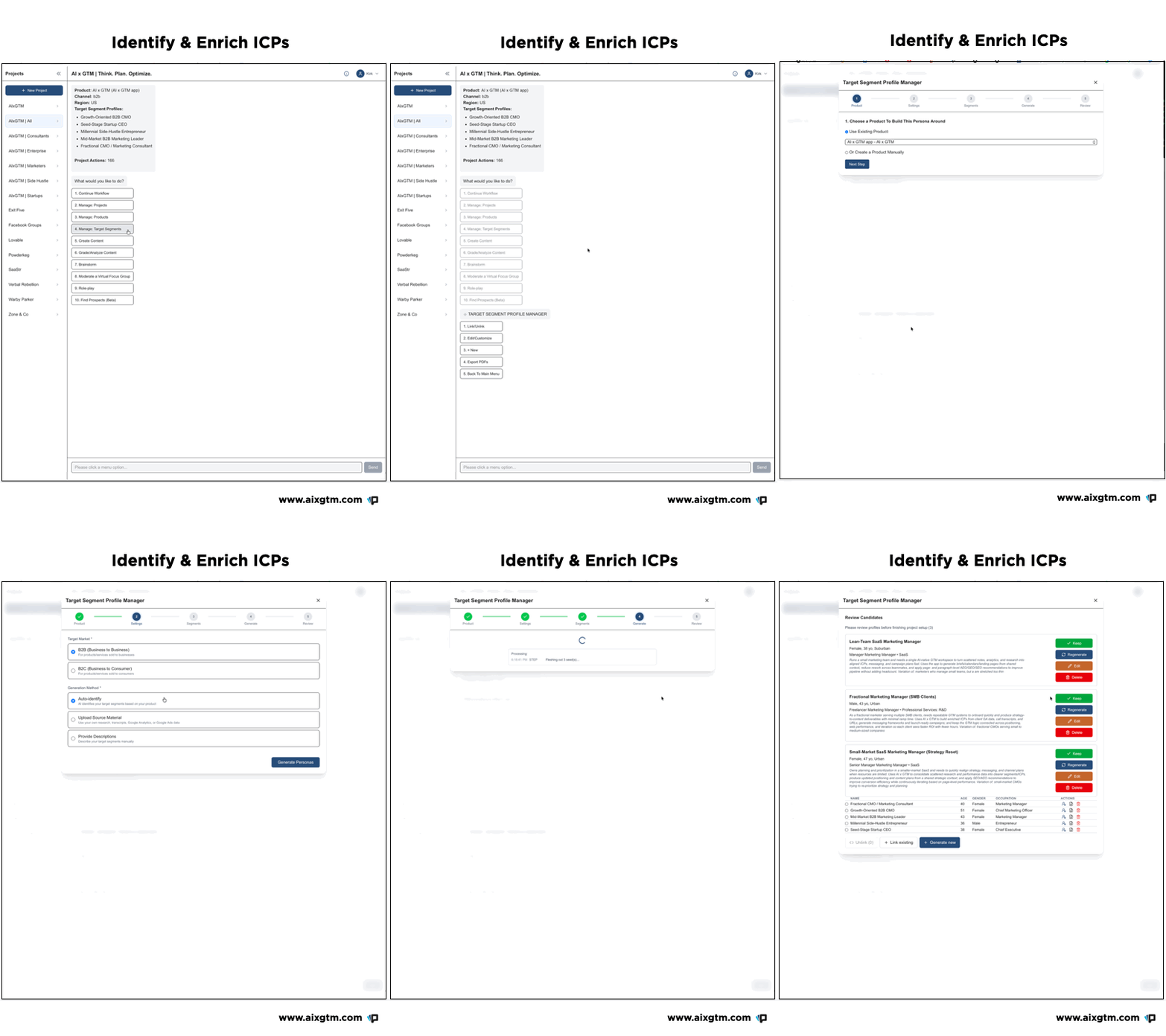
ICPs workflow preview in AI x GTM

ICPs

Why It Helps

Most teams do not suffer from having too little customer information. They suffer from having scattered information: sales notes, CRM fields, founder intuition, analytics, call transcripts, customer quotes, and half-finished persona docs. ICP work makes that information usable by turning it into a small set of high-fit customer profiles that can guide targeting, messaging, content, sales collateral, and product decisions.

Why You'll Use It

  • Consolidate messy customer knowledge into a small set of high-fit customer profiles.
  • Connect each ICP to firmographics, job roles, pain points, priorities, KPIs, and buying triggers.
  • Use ICPs as operating inputs for segmentation, messaging, campaigns, website optimization, and sales enablement.

Start With What An ICP Is For.

An ideal customer profile is a composite picture of the customers you most want to attract, convert, and retain. In B2B, that usually means a company or account type plus the people who influence the buying process. In founder-led or consultant-led GTM work, the ICP is less about creating a pretty persona and more about making priorities explicit: who matters most, why they buy, what they need to believe, and what proof will help them move.

  • Focus: which customer groups deserve attention first.
  • Alignment: how sales, marketing, product, and leadership describe the same buyer.
  • Direction: what messages, offers, channels, and proof points should be built around.

Gather The Customer Evidence You Already Have.

ICPs can be built from formal research, but they often start with the evidence already inside the business. The goal is to create a usable map of who buys, why they buy, how they compare options, and which traits separate high-fit customers from everyone else.

  • Sales calls, discovery notes, support tickets, CRM records, and win/loss notes.
  • Website analytics, search queries, paid media performance, and conversion paths.
  • Customer interviews, survey answers, review data, and market research.
  • Founder or consultant observations, especially when formal research is not available yet.

Turn The Evidence Into Three Decisions.

The practical ICP process has three decisions. First, choose an organizing framework. Second, sort customers into meaningful groups. Third, identify the attributes each group has in common. If a group cannot be differentiated by real needs, context, behavior, or economics, it probably should not be a separate ICP.

  • Framework: use cases, pain points, buying triggers, journey stage, value proposition, life stage, or jobs to be done.
  • Grouping: sort prospects or customers into three to five meaningful groups.
  • Attributes: identify firmographics, roles, priorities, KPIs, objections, and behavior patterns.

Package ICPs So They Can Be Used.

A useful ICP should be short enough to remember and detailed enough to guide action. Give each profile a clear name, a short summary, the buying context, the pain points, the metrics that matter, the proof it needs, and the messages most likely to resonate. Then connect the ICP to real workflows: landing pages, campaigns, content briefs, sales collateral, targeting, and measurement.

Proof Blocks

Claims made easier to verify

What the research supports

The research base supports structured profiling, segmentation, and persona transparency as useful inputs for targeting and marketing decisions. It does not mean an ICP automatically proves demand or guarantees conversion lift.

Content Cluster

Keep exploring this topic

GTM Planning For Everyone

Why Not Just Take AI x GTM For A Test Drive?

As long as you have a url, an open mind, and a few minutes to spare, you can see for yourself if it's right for you — not because speed matters, but because demonstrating time-to-value does.

FAQ

How many ICPs should a company create?

Most teams should start with three to five. Fewer than that can flatten meaningful differences; more than that can make prioritization hard. The right number is the smallest set that explains the major differences in value, urgency, buying context, and messaging needs.

What is the difference between an ICP and a buyer persona?

An ICP defines a high-fit customer or account profile. A buyer persona describes a person involved in the buying process. In B2B, the ICP often comes first, then personas explain the decision makers, users, influencers, and blockers inside that account type.

Can ICPs be created without formal research?

Yes, as long as the assumptions are labeled and tested later. Founder knowledge, sales notes, analytics, customer conversations, and consultant experience can produce a useful first ICP. The important part is to treat it as a working model, not permanent truth.

Related pages

Research and references

Predictive personas. Creating and validating predictive personas for target marketing Supports the idea that personas can be constructed and validated against consumer data.

Persona transparency. Persona Transparency: Analyzing the Impact of Explanations on the Effectiveness of Data-Driven Personas Useful for explaining why profile provenance and assumptions should be visible.