Planning
Customized Marketing Plan
A phased launch plan with a strategic core, 30/60/90 objectives, channel priorities, owners, and the KPI baseline every later artifact is measured against.
PDF · 31 pages · 1.4 MB
By Role
Fractional CMOs and marketing consultants need to move fast without making every engagement feel templated. AI x GTM gives you a repeatable strategic framework built on methods proven across 30 years of marketing practice, a private thinking space, and client-specific outputs you can trust. Explore ideas, pressure-test positioning, and generate draft deliverables without the heavy lift.
Fast GTM Output
Turn the inputs you already have into practical GTM work your team can review, refine, and use.
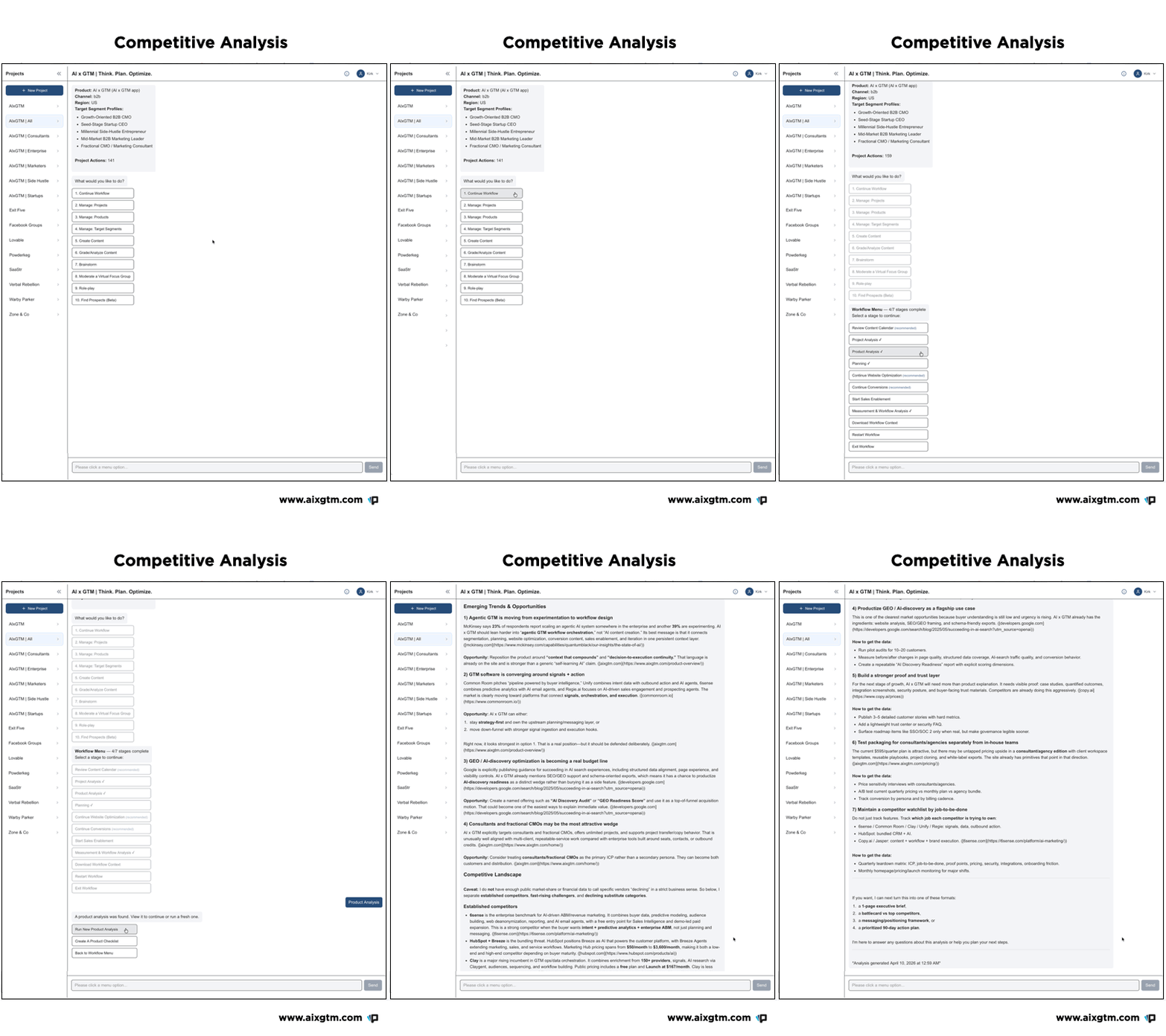
Competitive Analysis
Real Output
Before you sign up, read the actual deliverables. These are unedited exports from one GTM project — no email required.
Planning
A phased launch plan with a strategic core, 30/60/90 objectives, channel priorities, owners, and the KPI baseline every later artifact is measured against.
PDF · 31 pages · 1.4 MB
Planning
Jobs-to-be-done rows pairing each buying job with its pain, the features that answer it, the message, the proof required, and the CTA.
PDF · 8 pages · 0.6 MB
Planning
An annual budget with top allocations, per-line rationale, effort levels, and the market context and assumptions behind each number.
PDF · 29 pages · 1.5 MB
Why It Helps
You need to deliver client-ready work fast, but you also need space to think. Every engagement starts with the same discovery process, the same frameworks rebuilt from scratch, and the same challenge of making strategic context stick across deliverables. Meanwhile, you rarely have a place to independently test an idea or gut-check your own thinking before putting it in front of a client.
Why You'll Use It
Before you advise, you need to think. Use AI x GTM as a personal testing ground for exploring approaches, independently analyzing a client's current efforts, or running a copy check to gut-check messaging. The interactive sessions — focus groups, brainstorms, and one-on-one role-plays — give you a fast, private way to pressure-test ideas before presenting them.
The artifacts this system produces are the same ones consultants sell every day: persona-research packages typically bill at $2,500–$10,000, kickoff audits at $3,000–$15,000, marketing plans at $7,500–$30,000, and a full GTM strategy stack at $15,000–$50,000. Customers have resold individual deliverables in exactly those ranges — and anchored engagements north of $50,000 on a single site analysis. The app changes your cost of production, not the market rate for the work.
The 7-stage workflow gives every engagement the same proven structure — from project analysis through measurement and iteration — while the outputs stay specific to each client. Positioning briefs, marketing plans, messaging matrices, content calendars, and sales collateral all inherit the strategic context you built in the analysis stages.
Generate customized target segment PDFs for presentations, export draft budgets for budget discussions, and produce Google Ads targeting data from segment analyses. When the strategy is ready for the room, turn it into a Client, Board, or Investor pitch deck with a presentation-ready PDF and editable PowerPoint. Every deliverable is grounded in the project context rather than assembled from disconnected notes.
Create a project from the prospect's URL the night before, run the overnight automation, and walk in with a draft marketing plan, messaging matrix, 90-day calendar, and Client pitch deck for their business. Open with their site audit — three specific, evidence-based gaps that took minutes but read like a week of work. Or run a live focus group of their buyer personas in the room and let the objections surface in front of them. Pitch prep that normally takes 15–30 hours happens in an evening.
Team Projects are built for the consultant's model. Do the foundational strategy yourself — project analysis, marketing plan, messaging matrix, content calendar — then share a managed copy so your client can manage day-to-day content creation without touching the strategy. When the engagement is ready to graduate, use Transfer Control to hand the project over in full. No exports to untangle, no context lost.
Content Cluster
GTM Planning For Everyone
As long as you have a url, an open mind, and a few minutes to spare, you can see for yourself if it's right for you — not because speed matters, but because demonstrating time-to-value does.
The 7-stage workflow gives you a repeatable delivery framework that adapts to each client. Project analysis, target audience profiles, and planning artifacts are built once and feed into every downstream deliverable, so you spend less time recreating strategic context and more time producing client-ready work.
Each project is self-contained, but the workflow structure and prompt library are consistent. You can stand up a new client engagement and move through analysis, planning, and execution using the same proven process while the outputs stay specific to that client.
Yes. With Team Projects you can share a managed copy so the client manages day-to-day content while you keep control of the strategy, then issue a Transfer Control code to hand over full ownership when they are ready. The client keeps the entire project context — no exports to rebuild.
Yes. Standard artifacts and content pieces export to DOCX, Google Doc, or PDF, so you can move the work into your own branded templates. Pitch decks have dedicated presentation exports: a polished PDF and an editable PowerPoint you can restyle before it reaches the client. What you charge for the work is your positioning choice — the app changes your cost of production, not the market rate for the deliverable.